No account · no ID · no threshold

No-KYC crypto exchange

Swap 1,019 assets with nothing but a payout address — no sign-up, no document, no selfie, at any amount. And the part other pages leave out: the one case where a swap can be held, in plain words.

  • 0documents asked, at any amount
  • 0accounts, emails or passwords
  • 0cookies and request logs
  • 1case where a swap is held — read it
  • 1,019assets, 177 networks
  • Yesrefund address on every order
  1. Your walletyou send
  2. BTCSwapno account
  3. Your walletyou receive
What we ask you for
A payout address

Where the coins should go. That is the whole form — and an optional refund address, in case the swap cannot complete.

What we never ask for
ID, selfie, proof of address

Not at sign-up, because there is no sign-up. Not above an amount, because there is no threshold. Not to “unlock” anything, because we hold nothing.

Where your coins sit
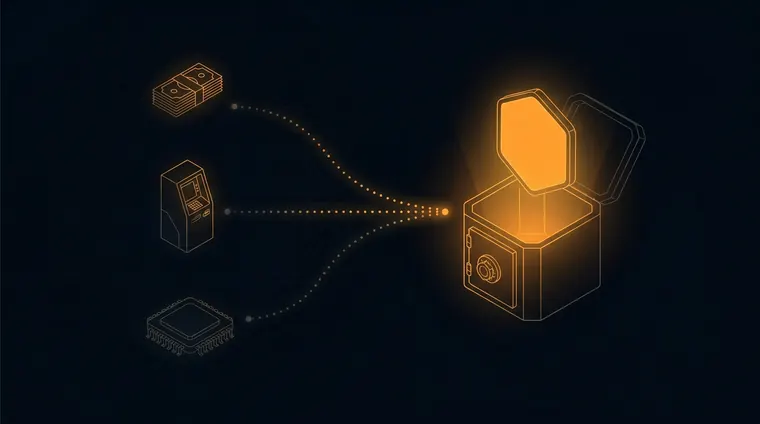
Nowhere — they pass through

One deposit in, one payout out, straight to your wallet. No balance with us means no account to verify, freeze or breach.

What we keep about you
Nothing to keep

No cookies, no request logs, no analytics script. Your recent order IDs stay in your own browser. The privacy policy names everyone else in the path.

Follows the market until your deposit confirms.

Min

1.8306

1 BTC ≈ 146.4445 XMR

Payout network fee 0.009 XMR
Estimated arrival 10-60 min
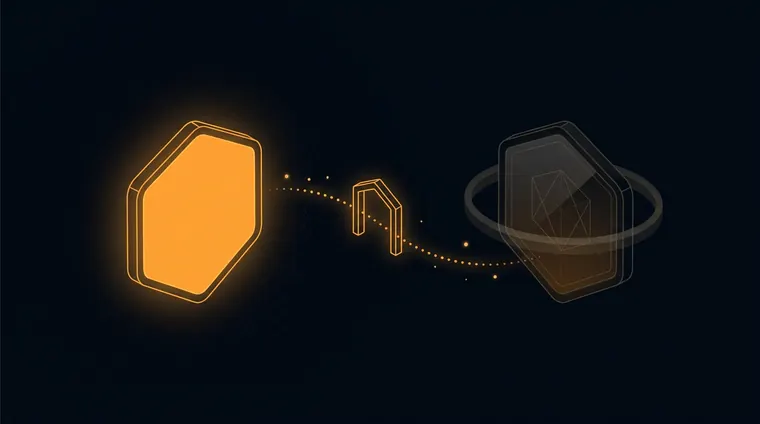
An identity card dissolving into dust while a coin passes through an open gate

The honest part

What “no KYC” means here — and its one limit

Every page ranking for this search promises that funds are “never held, whatever happens”. Nobody in this market can promise that, and the day it matters is the day you find out.

  1. 01

    We assess coins, not people

    The liquidity desk that settles your swap screens every deposit address against sanctions lists and known theft addresses. It is automated, it runs on an address, and it does not know or ask who you are.

  2. 02

    One case stops a swap: a flagged deposit

    Not an amount, not a country, not a frequency, not a pattern someone disliked. If the deposit is flagged by that screening, the exchange stops instead of settling. It is rare — and it is the only case.

  3. 03

    A held swap is not a confiscation

    You are told on the order page. Where the law allows a return, the deposit goes back to your refund address. And we will never ask for documents or an “unlock fee” — anyone who does, in our name, is a scammer.

Read the full AML policy

A checklist you can reuse

How to judge any no-KYC exchange

“No KYC” is a slogan until you check these seven things. Use the list on anyone, including us — the third column is our answer, with the page where it is written down.

Seven criteria to judge a no-KYC exchange
What to checkWhy it mattersHere
Is there an account at all? An account is a record tied to you: it can be breached, frozen, or asked to verify later. None. An order is a link with an ID. Track it without logging in.
Does verification start above some amount? The common trick: “no KYC” up to a limit, then documents once your funds are already in. No threshold. The only limits are the pair’s live minimum and maximum, shown before you send.
Do they hold your coins? A balance means custody — and custody is what gets frozen. No balance. One deposit, one payout to your own wallet.
Do they admit a swap can be held? Every desk screens deposits. A service that says “never” is either uninformed or not telling you. One case, documented. A flagged deposit — see above and the AML policy.
Where do funds go if the swap fails? Without a refund address, a failed swap becomes a support ticket. Refund address on every order, optional and recommended.
Are the costs visible before you send? A rate without its network fees is not a price. Yes. Network fees on their own line, margin inside the rate, fees per network published live.
What does the website record? No-KYC with full request logs and ad trackers is identification by another route. No request logs, no cookies, no third-party scripts. The privacy policy says what each of those means, and who else is in the path.

Two models

Account exchange or instant swap: what actually differs

An exchange with accounts

You register, verify your identity, deposit into a balance the platform controls, trade on an order book, then request a withdrawal. It suits frequent trading, fiat on-ramps and advanced orders.

  • Your documents are stored — for years, by law — and can leak.
  • Your coins sit in custody between deposit and withdrawal.
  • Withdrawals can be paused by the platform.

The right tool for day trading or for buying crypto with a bank card.

A no-KYC instant swap

You pick a pair, paste the address that should receive the coins, and send one deposit. The payout goes straight to your wallet. There is no balance, so there is no account.

  • Nothing to store: no identity data exists to leak.
  • No custody: coins pass through, they never sit.
  • Crypto to crypto only — no card payments, no bank transfers.

The right tool for turning one asset into another and getting on with your day.

How to

How to swap crypto without KYC

Three steps. You need a wallet for the coin you want to receive — nothing else.

Start a swap
  1. 01you

    Choose the pair and paste your address

    Any two of the 1,019 assets. The address is checked against the network before anything is created — a wrong-chain address is refused, not lost.

    Asked for
    a payout address
    Optional
    a refund address
    Not asked for
    name, email, ID
  2. 02you

    Send one deposit from your wallet

    You get a deposit address made for this exchange only, with a QR code. Nothing moves before you do: no account to fund, no card to enter.

    Transactions
    one, from your wallet
    Rate
    fixed or floating
    Tracking
    live order page, no login
  3. 03automatic

    Receive the coins in your wallet

    Once the network confirms the deposit, the exchange and the payout take seconds. The coins arrive at your address — there is no withdrawal step, because there was no balance.

    Arrival
    10-60 min
    Receipt
    transaction hashes on the order
    Left with us
    nothing

FAQ

No-KYC swaps, without the slogans

The rules

Is it legal to use a no-KYC exchange?

Swapping one crypto asset for another from your own wallet is lawful in most places, but crypto rules differ sharply between countries and they change. Whether it is lawful where you live is for you to check — the terms say so plainly, and we would rather tell you that than pretend one answer fits everyone.

Is there an amount above which you ask for ID?

No. There is no verified tier because there are no verified users. The only limits are each pair’s live minimum and maximum, which depend on liquidity and network fees — the exchange module shows both before you send anything.

Can my swap be frozen?

In one case: the deposit is flagged by the automated screening that the settling desk runs on every deposit address (sanctions lists, known theft addresses). Then the exchange stops; where the law allows, the deposit returns to your refund address. It is rare, and it is documented in the AML policy instead of being denied.

Privacy in practice

What do you know about me after a swap?

The order itself: two assets, two amounts, a deposit and a payout address — which are public on their blockchains anyway. No name, no email, no IP address in a log, no cookie. The privacy policy also names who else is in the path: the settling desk, the network edge in front of our server, and the blockchains.

Is a no-KYC exchange an anonymous crypto exchange?

Not quite — and it is worth being precise. No-KYC means we do not link the swap to an identity: no account, no document, no request logs. Bitcoin, Ethereum and most chains remain public ledgers, so anyone can follow the coins. If on-chain privacy is what you need, that is what Monero is for.

Why do some “no-KYC” exchanges ask for ID anyway?

Usually because the promise was broader than the practice: verification kicks in above an amount, or when a deposit is flagged, and the page never said so. Use the checklist above before you send funds anywhere — a service that documents its limit is safer than one that claims to have none.

Swap now, as nobody in particular

A payout address is all it takes. No account, no ID, no threshold.

Start a swap